Practical Newborn Clip Art for Modern DIY and Design
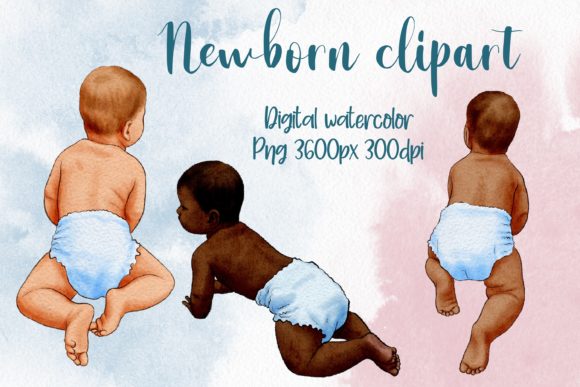
When you're developing a visual identity for a product or a personal project, the assets you choose define the entire narrative. While typography handles the text, Newborn Clip Art provides the visual punctuation that captures immediate attention. This specific collection isn't just a random assortment of images; it is a curated set of 9 individual PNG images featuring high-resolution (300dpi) graphics on transparent layers. For designers, marketers, and crafters alike, this type of asset is fundamental. It bridges the gap between a concept and a finished product, offering a professional polish that elevates everything from packaging design to social media graphics.
The Versatility of PNG Assets in Modern Projects
In the realm of visual content creation, flexibility is currency. The strength of this Newborn Clip Art lies in its file format. Because the images are delivered as PNGs with transparent backgrounds, they function like a premium font or a modular design element—you can layer them over any surface without worrying about clashing backgrounds or messy edges. This is crucial for maintaining a clean brand identity. Whether you are designing a logo, creating editorial design for a parenting blog, or mocking up packaging design for a new product line, the ability to seamlessly integrate these graphics ensures consistency.
For small business owners and entrepreneurs, the applications are nearly limitless. Consider the production of physical goods. If you are in the business of handmade stationery, these assets allow you to create unique invitations, place cards, and wrapping paper that stand out in a crowded market. The same principle applies to sublimation design. If you are printing on mugs, t-shirts, or tote bags, you need high-resolution graphics that won't pixelate when scaled. These images are optimized for that exact purpose, ensuring that your DIY project looks just as professional as mass-produced merchandise.
Enhancing Visual Hierarchy and Engagement
Good design is about guiding the viewer's eye. Just as a script font or a handwritten font can add warmth and personality to a headline, well-chosen clip art anchors the composition. In web design, for instance, these graphics can break up long blocks of text, making your content more digestible and engaging. They add a human touch that stock photography often fails to provide. When used in scrapbooking or cardmaking, they provide the focal point around which other elements—like color palettes and typography—can be organized.
The personality of this collection is tailored for specific niches, particularly those involving family, care, and celebration. However, the utility extends far beyond simple baby themes. Think about books and journals. A designer working on a hardcover journal might use these elements to create a subtle, thematic texture on the cover or as decorative motifs inside the pages. This creates a tactile, immersive experience for the user. In marketing, using relevant imagery helps in audience segmentation. It signals immediately to the viewer that the content speaks to their interests, thereby increasing engagement rates and brand recognition.
Integrating Assets with Typography and Brand Strategy
While clip art is visual, it must coexist harmoniously with your typography. A common mistake in creative design is treating images and text as separate entities. Instead, view your Newborn Clip Art as a partner to your chosen typeface. If you are using a bold display font for a header, a delicate illustration can soften the composition. Conversely, if your layout relies on a clean sans serif font, a detailed piece of art can add necessary depth and interest. This balance is key to professional modern typography and layout.
For those building a brand identity, consistency is non-negotiable. Using a cohesive set of graphics across all platforms—from your website to your email newsletters and physical packaging—builds trust. It shows that you pay attention to details. This collection provides the raw material for that consistency. You can use the same motif on a sublimation design for a physical product and on the social media graphics promoting that product, creating a seamless customer journey.
Practical Workflow and Licensing Considerations
When incorporating design assets into commercial work, understanding the workflow is just as important as the aesthetic. The download process for these files is streamlined for efficiency. Once acquired, you have immediate access to the files, allowing you to move quickly from concept to execution. This is vital for professionals working on tight deadlines, such as event planners preparing for weddings, birthdays, or parties.
Furthermore, evaluating the fit of an asset involves looking at the technical specifications. At 300dpi, these images meet the standard for print quality, making them safe for editorial design and high-quality physical prints. Unlike low-resolution web graphics that fail in print, these are built for versatility. When you are evaluating font pairings for your next project, apply the same scrutiny to your imagery. Look for assets that offer transparency, high resolution, and a style that complements your overall aesthetic. By treating your clip art with the same respect you give your typography, you ensure that every project you touch—whether it is a mug design, a place card, or a digital ad—maintains a standard of excellence.